The Story of an Hour: A Comprehensive Analysis (Kate Chopin ー PDF Focus)
Kate Chopin’s “The Story of an Hour” is readily available as a PDF, frequently appearing alongside analyses and feminist interpretations online.
Numerous sources, like KateChopin.org, offer the text, often within collections of short stories and critical essays in PDF format.
These PDF resources facilitate academic study and classroom use of this impactful narrative.
Kate Chopin’s “The Story of an Hour,” penned in 1894, remains a potent and frequently analyzed piece of American short fiction. Its exploration of marital constraints and female desire continues to resonate with readers today. The story, often encountered as a readily accessible PDF document, presents a concise yet profoundly impactful narrative.
The ease of access to the text in PDF format has contributed to its widespread inclusion in academic curricula and literary discussions. Online repositories and educational websites commonly host the story, alongside critical essays and scholarly interpretations. This accessibility allows for convenient study and analysis of Chopin’s masterful use of irony and symbolism. The story’s brevity belies its complex themes, making it an ideal text for introductory literary analysis.
Finding a PDF version is simple, ensuring broad engagement with Chopin’s work.
II. Accessing the Text: “Story of an Hour” PDF Availability
Numerous online platforms offer “The Story of an Hour” in PDF format, ensuring widespread accessibility for students, researchers, and general readers. Websites dedicated to classic literature, such as KateChopin.org, frequently provide downloadable PDF versions of the story.
A simple internet search for “Story of an Hour PDF” yields a multitude of results, including links to educational institutions and digital libraries hosting the text. These PDF files often include accompanying critical analyses or are bundled within larger collections of Chopin’s short stories. The convenience of the PDF format allows for easy printing, annotation, and offline reading, facilitating in-depth study of this iconic work.
Free downloads are common, promoting literary engagement.
III. Kate Chopin: A Biographical Overview
Kate Chopin (1850-1904), born Katherine O’Flaherty, was a celebrated American author known for her exploration of female identity and societal constraints in the 19th century. Her work, including “The Story of an Hour,” often challenged conventional norms regarding marriage and independence.
Growing up in a Creole society in Louisiana profoundly influenced her writing, imbuing it with a unique cultural perspective. Despite facing criticism during her lifetime, particularly for her frank depictions of women’s desires, Chopin’s literary reputation has soared in recent decades. Accessing her works, like the readily available “Story of an Hour” in PDF format, allows modern readers to appreciate her groundbreaking contributions to American literature and feminist thought.
She paved the way for future female authors.
III.1. Chopin’s Life and Literary Context
Kate Chopin’s life, marked by both privilege and personal loss, deeply informed her literary output. Born into a Creole family in St. Louis, Missouri, she experienced a relatively sheltered upbringing before marrying Oscar Chopin and moving to Louisiana. The societal expectations placed upon women during the Victorian era heavily influenced her writing, prompting her to explore themes of confinement and liberation.
The availability of her stories, such as “The Story of an Hour” in convenient PDF versions, allows for easy access to her work. Her literary context was one of burgeoning realism and nascent feminism, and she boldly challenged prevailing norms. Her stories often reflect the restrictive social climate of the time.
III.2. Themes Common in Chopin’s Work
Kate Chopin’s writing consistently grapples with the constraints placed upon women in 19th-century society. A central theme is the search for individual identity and autonomy within the confines of marriage and societal expectations. The readily available PDF versions of her stories, like “The Story of an Hour,” facilitate exploration of these recurring motifs.
She frequently examines the complexities of female desire and the limitations imposed by patriarchal structures. Chopin also explores themes of Creole culture and the nuances of Louisiana life. Her work often features characters yearning for freedom and self-expression, challenging conventional notions of femininity.
IV. Plot Summary of “The Story of an Hour”
“The Story of an Hour” centers on Louise Mallard, who receives news of her husband, Brently’s, presumed death in a railroad accident. Initially distraught, Louise retreats to her room and, surprisingly, begins to experience a burgeoning sense of freedom. The PDF text reveals her realization that life without her husband offers a prospect of independence she’d never known.
This newfound liberation is short-lived. Brently unexpectedly returns home, unharmed. The shock of his reappearance proves fatal to Louise, who collapses and dies. The story’s ironic twist reveals she died not of grief, but of joy that was swiftly crushed, a detail readily apparent in any PDF edition.
V. Key Characters and Their Significance
The characters in Kate Chopin’s “The Story of an Hour,” easily accessible in PDF format, are pivotal to the narrative’s impact. Louise Mallard embodies the repressed desires for autonomy experienced by women of the 19th century. Brently Mallard, though physically present only in report, symbolizes the societal constraints placed upon her.
Josephine and Richards, supporting characters, represent the conventional expectations of grief and societal norms. Examining character analyses within a PDF version highlights how Chopin uses them to contrast with Louise’s internal awakening. Their concern underscores the story’s critique of marital and societal expectations.
V.1. Louise Mallard: A Detailed Examination
Louise Mallard, central to Chopin’s “The Story of an Hour” – widely available as a PDF – undergoes a profound internal transformation. Initially presented as fragile due to a “heart trouble,” she unexpectedly embraces a sense of liberation upon hearing of her husband’s supposed death.
PDF analyses reveal Louise’s realization of self-ownership, a radical concept for the era. Her joy isn’t from escaping a cruel marriage, but from the prospect of independence. This is a powerful feminist statement. The story, often studied via PDF resources, showcases her evolving psychology and tragic fate.
V.2. Brently Mallard: Role and Symbolism
Brently Mallard, in Kate Chopin’s “The Story of an Hour” – frequently accessed as a PDF – functions primarily as a catalyst for Louise’s awakening. He is depicted as a conventional husband, seemingly unaware of his wife’s suppressed desires. His reported death, though erroneous, unlocks Louise’s yearning for autonomy.
PDF analyses highlight Brently as a symbol of the patriarchal constraints of the 19th century. He embodies the societal expectations that confine women. His unexpected return, shattering Louise’s newfound freedom, underscores the story’s tragic irony. Studying the PDF version reveals his role isn’t malicious, but representative of a stifling era.
V.3. Josephine and Richards: Supporting Characters
Josephine and Richards, in “The Story of an Hour” – often studied via readily available PDF versions – serve as crucial, yet understated, supporting characters. Josephine, Louise’s sister, embodies conventional concern, attempting to comfort Louise while simultaneously hindering her emotional processing. PDF analyses reveal her as a representative of societal expectations regarding grief.
Richards, a friend of Brently, delivers the news of the supposed accident. Both characters unwittingly contribute to the story’s dramatic irony. Accessing the story as a PDF allows close examination of their limited perspectives. They fail to comprehend Louise’s complex emotional journey, highlighting the isolation of her inner life and the story’s central themes.
VI. Major Themes Explored in the Story
“The Story of an Hour,” frequently accessed as a PDF for academic study, powerfully explores themes of freedom, confinement, and marital independence. Chopin, through Louise Mallard’s brief experience, critiques 19th-century societal constraints on women. PDF analyses emphasize the story’s depiction of repressed desires and the yearning for self-discovery.
Marriage is presented not as a source of fulfillment, but as a form of subtle imprisonment. The PDF text reveals Louise’s realization that her newfound freedom, ironically born from grief, is more valuable than societal expectations. Chopin’s work, available in PDF format, remains relevant for its feminist undertones and exploration of individual autonomy.
VI.1. Freedom and Confinement
The central tension in Kate Chopin’s “The Story of an Hour,” easily found as a PDF, revolves around the concepts of freedom and confinement. Louise Mallard’s initial grief quickly transforms into a liberating realization – her husband’s presumed death offers her independence. Accessing the story via PDF allows close examination of this emotional shift.
Her marriage, though seemingly conventional, is depicted as a subtle form of imprisonment. The PDF text highlights the societal expectations that confined women in the 19th century. Louise’s joy isn’t in her husband’s loss, but in the prospect of a life lived for herself, a freedom denied within the confines of marriage.
VI.2. Marriage and Independence
“The Story of an Hour,” readily available as a PDF, presents a stark critique of 19th-century marriage and its impact on female independence. Louise Mallard’s reaction to her husband’s supposed death isn’t grief, but a burgeoning sense of self-discovery. The PDF format facilitates detailed analysis of her internal monologue.
Chopin portrays marriage not as a union of equals, but as a societal construct that restricts a woman’s autonomy. The story, often studied through PDF versions, reveals Louise’s yearning for a life free from the expectations and control inherent in marital bonds. Her newfound independence, though tragically short-lived, is powerfully depicted.
VI.3. The Repression of Women in the 19th Century
Kate Chopin’s “The Story of an Hour,” easily accessible as a PDF, powerfully illustrates the stifling constraints placed upon women in the 19th century. The narrative, often analyzed through readily available PDF copies, reveals a society where women lacked agency and were defined by their marital status.
Louise Mallard’s internal struggle embodies the repressed desires and unfulfilled potential of women during that era. The PDF allows close examination of how societal norms dictated a woman’s life, limiting her intellectual and emotional growth. Chopin’s story, in its concise PDF form, serves as a poignant commentary on this systemic oppression.
VII. Symbolism in “The Story of an Hour”
Analyzing Kate Chopin’s “The Story of an Hour,” conveniently found in PDF format online, reveals rich symbolism. The open window, a central image readily visible in PDF versions, represents Louise Mallard’s newfound freedom and the possibilities beyond her constrained life.
The recurring motif of springtime, easily observed when studying the text as a PDF, symbolizes renewal and awakening, mirroring Louise’s emotional rebirth. Even the heart condition, ironically foreshadowing her demise, gains significance through PDF analysis. These symbols, accessible within the PDF, deepen the story’s exploration of liberation and societal expectations.
VII.1. The Open Window: A Symbol of Opportunity
Within Kate Chopin’s “The Story of an Hour,” easily accessible as a PDF document, the open window functions as a potent symbol of opportunity. Studying the text in PDF format highlights how Louise Mallard gazes through it, observing a vibrant world previously unavailable to her.
This window, clearly depicted in digital versions and PDF copies, isn’t merely a physical opening but a gateway to independence and self-discovery. The sights and sounds filtering through represent the freedom she anticipates, a life unburdened by marital constraints. The PDF allows focused examination of this crucial image, revealing its profound significance.
VII.2. The Heart Condition: Irony and Foreshadowing
Examining “The Story of an Hour” as a PDF reveals the crucial role of Louise Mallard’s “heart trouble.” This condition, initially presented as a vulnerability, becomes deeply ironic. The PDF format allows close reading, emphasizing how the news of Brently’s death is delivered with concern for her fragile heart.
However, it’s not grief that ultimately stops her heart, but the shock of seeing him alive. This dramatic irony, readily apparent in the PDF text, foreshadows the tragic ending. The heart condition, therefore, serves as both a medical detail and a symbolic premonition of Louise’s fate, powerfully highlighted in digital versions.
VII.3. Springtime Setting: Renewal and Awakening
Analyzing “The Story of an Hour” in PDF format reveals the significance of its springtime setting. Chopin masterfully uses imagery of renewal – the “delicious breath of rain” and the vibrant life outside Louise’s window – to mirror her internal awakening. The PDF allows focused attention on these descriptive passages.
This blossoming world contrasts sharply with the “confined” space Louise inhabits, symbolizing her stifled existence. The springtime setting, easily observed within the PDF text, foreshadows the possibility of a new beginning, a life free from the constraints of marriage. It’s a poignant backdrop to her fleeting moment of liberation.
VIII. Literary Devices Employed by Chopin
Examining “The Story of an Hour” as a PDF document highlights Chopin’s skillful use of literary devices. The story is steeped in irony – dramatic, situational, and verbal – readily apparent when analyzing the text closely within the PDF. Foreshadowing, particularly concerning Louise’s “heart trouble,” subtly hints at the tragic outcome.
Furthermore, Chopin’s evocative imagery creates a vivid emotional landscape. A PDF version allows for repeated readings, enabling a deeper appreciation of her descriptive language. These techniques, easily identified in the PDF, contribute to the story’s enduring power and its complex exploration of freedom and repression.
VIII.1. Irony: Dramatic, Situational, and Verbal
Analyzing a PDF of “The Story of an Hour” reveals Chopin’s masterful deployment of irony. Dramatic irony pervades, as the reader knows Louise welcomes her husband’s supposed death while others believe she grieves. Situational irony is central: Louise dies not from joy, but from a shock to her newfound independence.
Even verbal irony subtly appears in the characters’ pronouncements. Accessing the story as a PDF facilitates close reading to uncover these layers. The tragic ending, viewed through a PDF, underscores the devastating irony – a “joy that kills,” highlighting societal constraints.
VIII.2. Foreshadowing: Hints of Louise’s Fate
A PDF version of “The Story of an Hour” allows careful examination of Chopin’s subtle foreshadowing. Louise’s “heart trouble” initially seems a physical ailment, but ironically foreshadows her emotional collapse upon Brently’s return; The descriptions of springtime, while symbolizing renewal, also hint at a fragile, fleeting joy.
The story’s confined setting and Louise’s restricted life subtly prepare the reader for a tragic outcome. Studying the text as a PDF reveals how Chopin plants these clues. The narrative’s pacing, accessible through a PDF, builds tension, subtly hinting at Louise’s ultimate fate.
VIII.3. Imagery: Creating a Vivid Emotional Landscape
Accessing “The Story of an Hour” as a PDF enhances appreciation for Chopin’s evocative imagery. The open window, a central image, symbolizes the freedom Louise envisions. Descriptions of scents and sounds – the “delicious breath of rain” – create a sensory experience, mirroring Louise’s awakening emotions.
A PDF format allows close reading of how Chopin contrasts the stifling interior with the vibrant exterior world. The imagery of Louise’s physical sensations – her weakening pulse, the blood rushing in her veins – vividly portrays her internal struggle. These details, readily available in a PDF, build a powerful emotional landscape.
IX. Feminist Interpretations of the Story
Numerous PDF resources exploring “The Story of an Hour” highlight its feminist themes. Analyses available online, often in PDF format, interpret Louise Mallard’s reaction as a rejection of patriarchal marriage and a yearning for self-determination.
These interpretations, easily accessible through PDF downloads, view the story as a critique of 19th-century societal constraints on women. Chopin’s depiction of Louise’s suppressed desires resonates with feminist thought. The PDF format facilitates scholarly engagement with these critical perspectives, showcasing the story’s enduring relevance to feminist discourse.
X. Critical Reception and Historical Context
Accessing “The Story of an Hour” in PDF format allows for convenient study alongside historical context. Initially, the story received limited attention, but modern critical analysis, often found in PDF collections, recognizes its significance.
Scholarly articles, readily available as PDF downloads, detail the story’s challenging portrayal of marriage and female independence within the 19th-century American landscape. The PDF medium supports in-depth examination of Chopin’s work, revealing how it subverted conventional norms. These resources demonstrate a growing appreciation for Chopin’s bold narrative choices.
XI. “The Story of an Hour” and its Place in American Literature
The accessibility of “The Story of an Hour” as a PDF has significantly contributed to its enduring presence in American literary studies. Initially overlooked, the story gained prominence through anthologies and critical analyses, often distributed in PDF form.
Its concise yet powerful exploration of female identity and societal constraints cemented its place as a foundational text in feminist literature. PDF versions facilitate comparative studies with other works by Chopin and contemporaries, highlighting her unique voice. The story’s impact continues to resonate, frequently appearing on syllabi and in scholarly PDF publications.
XII. Finding and Utilizing PDF Versions of the Text
Numerous online repositories offer “The Story of an Hour” in PDF format, readily accessible for academic and personal use. Websites like KateChopin.org and various educational platforms host the story, often alongside critical essays also available as PDF downloads.
A simple web search for “Story of an Hour PDF” yields numerous results. Utilizing PDF readers allows for annotation, highlighting, and easy sharing. These digital versions are invaluable for students, researchers, and anyone seeking to engage with Chopin’s work conveniently. Ensure sources are reputable for accurate text.
XIII. Analyzing the Story’s Structure and Narrative Technique
“The Story of an Hour” employs a tightly controlled, third-person limited narrative, focusing intensely on Louise Mallard’s internal experience. This technique, readily apparent in PDF versions of the text, allows Chopin to reveal Louise’s evolving consciousness with precision.
The story’s concise structure—spanning just a few pages in most PDF formats—heightens its impact. Chopin masterfully uses irony and foreshadowing, elements easily traced when studying the text in PDF form. The rapid pacing mirrors Louise’s emotional shift, culminating in the shocking final revelation.
XIV. Exploring the Psychological State of Louise Mallard
Analyzing PDF versions of “The Story of an Hour” reveals Louise Mallard’s complex psychological journey. Initially presented as fragile due to a “heart trouble,” she undergoes a profound internal transformation upon hearing of her husband’s supposed death.
The story, accessible in numerous PDF formats, meticulously charts Louise’s shift from grief to a burgeoning sense of freedom and self-discovery. Chopin portrays a woman stifled by societal expectations, finding liberation in the prospect of independence.
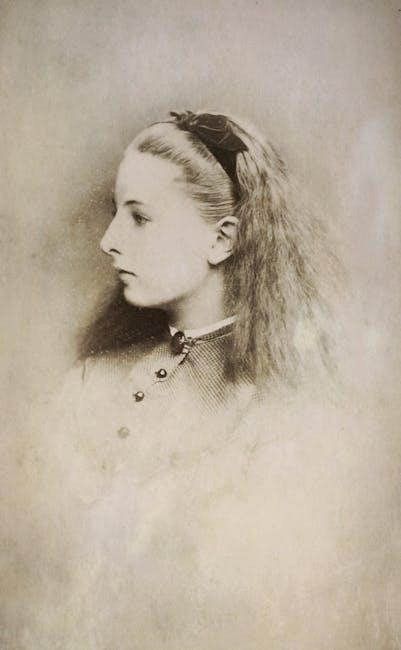
Her ultimate demise, ironically attributed to “joy that kills,” underscores the tragic repression of her newfound psychological awakening.
XV. The Ending: Shock Value and Interpretation
The abrupt ending of “The Story of an Hour,” easily studied through readily available PDF copies, delivers a potent shock. Louise’s death, diagnosed as a joy-induced heart attack upon Brently’s return, is deeply ironic and invites multiple interpretations.
PDF analyses often highlight how Chopin subverts expectations, revealing Louise didn’t die of grief, but of the crushing realization that her newfound freedom was an illusion. The ending critiques the societal constraints that denied women autonomy.
It’s a stark commentary on the psychological toll of 19th-century marriage, powerfully conveyed in this concise and impactful narrative.
XVI. Comparing “The Story of an Hour” to Other Works by Chopin

Examining “The Story of an Hour,” often found in comprehensive PDF collections of Chopin’s work, reveals thematic consistency with her other writings. Like “Desiree’s Baby,” it explores societal constraints and the limited agency afforded to women.
PDF resources showcasing Chopin’s complete short stories demonstrate her recurring focus on female identity, marital dissatisfaction, and the search for self-expression. Both stories challenge conventional norms and expose the hypocrisy of the era.
Chopin consistently portrays women grappling with societal expectations, making “The Story of an Hour” a quintessential example of her literary style and concerns.
XVII. The Story’s Relevance to Contemporary Society
Despite being written in 1894, “The Story of an Hour,” easily accessible in PDF format for study, continues to resonate profoundly today. Its exploration of female autonomy and the complexities of marriage remains strikingly relevant.
PDF analyses often highlight the story’s enduring power in sparking discussions about gender roles, societal expectations, and the pursuit of individual fulfillment. The themes of confinement and liberation transcend historical context.
The story’s impact is amplified by its concise yet potent narrative, making it a valuable text for examining ongoing struggles for equality and self-determination.
XVIII. Academic Resources and Scholarly Articles (PDF Format)
Numerous academic databases and online repositories offer scholarly articles analyzing “The Story of an Hour,” frequently available as PDF downloads. These resources provide in-depth critical perspectives on Chopin’s work.
PDF searches reveal feminist interpretations, explorations of symbolism, and analyses of Chopin’s narrative techniques. Sites like JSTOR and university libraries host valuable research.
Accessing these PDF articles allows for a comprehensive understanding of the story’s literary merit and historical context, enriching study and research. They often delve into the story’s enduring relevance.
XIX. Common Misconceptions About the Story
A frequent misconception surrounding “The Story of an Hour” centers on Louise Mallard’s reaction to her husband’s supposed death. Some readers initially interpret her joy as a sign of callousness, failing to grasp the story’s critique of marital constraints.
Another misunderstanding involves the PDF versions circulating online; some lack proper scholarly context, leading to superficial interpretations. It’s crucial to utilize reputable sources when studying the text.
Furthermore, the ironic ending is often missed on a first reading, obscuring Chopin’s masterful use of dramatic irony and foreshadowing. Careful analysis of the PDF text is key.
XX. Teaching “The Story of an Hour” in the Classroom
When teaching Kate Chopin’s “The Story of an Hour,” utilizing readily available PDF versions streamlines access for students. Encourage critical reading, focusing on irony and symbolism.
Facilitate discussions about the societal pressures faced by women in the 19th century, prompting students to analyze Louise Mallard’s internal conflict.
Assigning close readings of the PDF text, alongside scholarly articles (also often found in PDF format), enhances comprehension. Address common misconceptions regarding Louise’s reaction.
Consider exploring feminist interpretations and the story’s enduring relevance to contemporary discussions about freedom and independence.
XXI. The Georgian Language Connection (axsna-ganmarteba), Anomaly Explanation
The recurring presence of “axsna-ganmarteba” (Georgian for “explanation”) within search results concerning “The Story of an Hour” PDF downloads appears as an anomalous data inclusion.
This likely stems from unrelated Georgian language resources indexed alongside the literary text, potentially due to keyword overlap or algorithmic miscategorization during web scraping.
The term relates to definitions and clarifications, but has no intrinsic connection to Kate Chopin’s work or the PDF content itself. It represents irrelevant data polluting search results.
Users seeking the story’s PDF should filter results, focusing on literary websites and academic databases to avoid these linguistic anomalies.
XXII. Financial Document References within Search Results (Irrelevant Data)
The inclusion of financial document references – specifically mentions of “income orders” and “revenue service” documents – within search results for “The Story of an Hour” PDFs represents another instance of irrelevant data contamination.
These references, detailing financial transactions (like order N 4896634 to Liiana Gotsiridze), are entirely unrelated to Kate Chopin’s literary work and its digital availability.
This likely arises from indexing errors, where unrelated PDF files containing financial information are incorrectly associated with searches for the story’s text.
Users should exercise caution and prioritize results from reputable literary sources when seeking a reliable PDF version of “The Story of an Hour.”
XXIII. Conclusion: The Enduring Power of Chopin’s Story
Kate Chopin’s “The Story of an Hour” continues to resonate with readers, readily accessible today through numerous PDF versions available online.
Its exploration of female identity, marital constraints, and the pursuit of independence remains powerfully relevant, fueling ongoing critical analysis and feminist interpretations.
The ease of accessing the text in PDF format has broadened its reach, facilitating academic study and inclusion in literary curricula.
Despite the presence of irrelevant data in search results, the story’s enduring impact ensures its continued prominence in American literature, a testament to Chopin’s masterful storytelling.